Support our educational content for free when you purchase through links on our site. Learn more
Health Psychology Notes: 12 Essential Topics 🧠

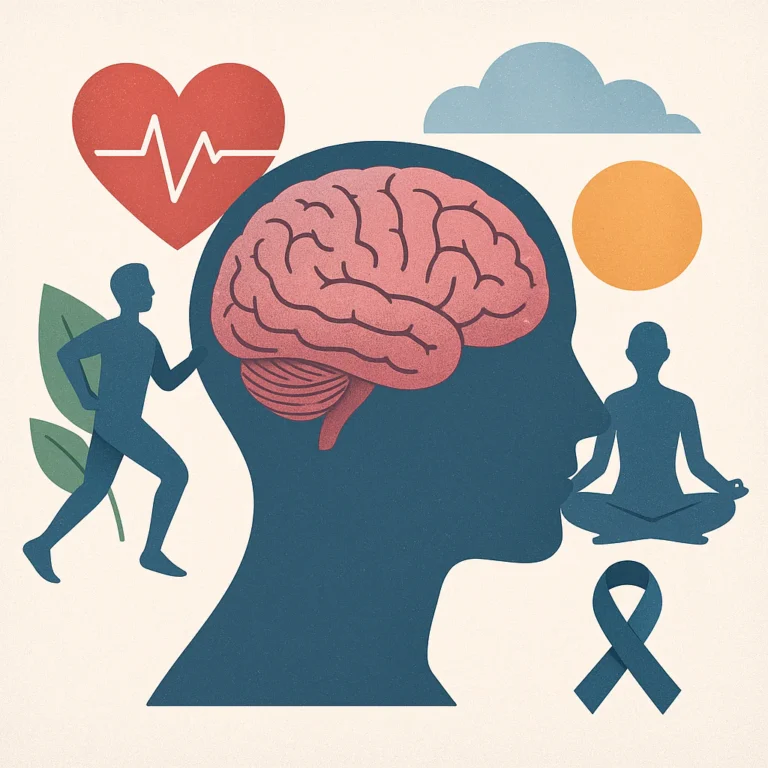
The best health psychology notes connect biological, psychological, and social factors to real examples. This guide organizes the core theories, research methods, and practical applications so you can understand the subject—not just memorize a pile of definitions.
Imagine two people with the same health condition: one has flexible work, easy access to care, and family support; the other faces long shifts, transport barriers, and caregiving demands. Their biology may be similar, but their day-to-day health choices can look very different. That’s why health psychology studies the whole picture, not just willpower.
Key Takeaways
- Use the biopsychosocial model: Health reflects interacting biological, psychological, and social influences.
- Know the core theories: The Health Belief Model, Theory of Planned Behavior, Social Cognitive Theory, and Transtheoretical Model help explain health behaviors and change.
- Behavior is shaped by context: Stress, access, culture, relationships, and living conditions can affect health habits and treatment routines.
- Connect each concept to an example: Define it, apply it, and consider its limitations to make notes more useful for exams.
- Read research critically: An association does not automatically prove cause and effect, and every study method has limitations.
Table of Contents
- ⚡️ Quick Tips and Facts: Health Psychology Notes
- 🧠 What Is Health Psychology? Definition, Scope, and Goals
- 📚 Background and History of Health Psychology
- 🔄 The Biopsychosocial Model of Health and Illness
- Biological, Psychological, and Social Influences
- Biopsychosocial Model vs. Biomedical Model
- 🎯 Major Goals and Roles of Health Psychology
- 🧩 Core Concepts and Theories in Health Psychology
- Health Belief Model
- Theory of Planned Behavior
- Social Cognitive Theory and Self-Efficacy
- Transtheoretical Model of Behavior Change
- Stress, Coping, and Appraisal Theory
- 📖 12 Essential Health Psychology Topics to Know
- 1. Health, Wellness, and Illness
- 2. Health Behaviors and Lifestyle Choices
- 3. Stress and Its Effects on the Body
- 4. Coping Strategies and Resilience
- 5. Pain Perception and Pain Management
- 6. The Immune System and Psychoneuroimunology
- 7. Chronic Illness and Adjustment
- 8. Patient–Provider Communication
- 9. Treatment Adherence and Medication Use
- 10. Health Promotion and Disease Prevention
- 11. Mental Health and Physical Health
- 12. Culture, Inequality, and Social Determinants of Health
- 🏥 Health Psychology in Clinical and Community Settings
- Clinical Health Psychology
- Community Health and Public Health
- Behavioral Medicine and Integrated Care
- 🔬 Health Psychology Research Methods
- Observational and Experimental Studies
- Measurement, Reliability, and Validity
- Correlation, Causation, and Research Limitations
- Ethics in Health Psychology Research
- 📝 How to Study Health Psychology: Notes, Revision, and Exam Tips
- How to Turn Lectures Into Clear Study Notes
- Key Terms and Definitions to Memorize
- Exam Questions and Short-Answer Practice
- 🌱 Applying Health Psychology to Everyday Life
- ❓ Common Misconceptions About Health Psychology
- ✅ Conclusion
- 🔗 Recommended Links
- 🙋 FAQ
- What are health psychology notes?
- What are the main topics in health psychology?
- What is the biopsychosocial model?
- How does stress affect physical health?
- What is the difference between health psychology and clinical psychology?
- How can I study health psychology effectively?
- 📑 Reference Links
⚡️ Quick Tips and Facts: Health Psychology Notes
- Health psychology studies how thoughts, feelings, behavior, biology, and social conditions interact with health and illness. It’s not about blaming people for getting sick; it’s about understanding what helps people stay well and get effective support.
- A useful starting point is our overview of psychology facts about health.
- Remember the biopsychosocial model: health is shaped by biological, psychological, and social influences—not just a diagnosis or a single behavior.
- Health psychologists may work in hospitals, research teams, public health, universities, and community programs. Their work can include behavior-change support, research, patient communication, and health-service improvement.
- Good study notes connect concepts to examples. For instance, self-efficacy is easier to remember when you picture someone gradually rebuilding confidence in exercise after an injury.
- Health behaviors are shaped by more than willpower. Time, money, disability, stress, access to care, culture, and the built environment can all affect what choices are realistically available.
- Health psychology draws on evidence from fields including psychology, medicine, epidemiology, and public health. For reliable background, see the American Psychological Association’s overview of health psychology.
| At a glance | What to remember |
|---|---|
| Central question | How do biological, psychological, behavioral, and social factors affect health? |
| Common approaches | Health promotion, illness prevention, behavior-change support, research, and improved healthcare communication |
| Key framework | The biopsychosocial model |
| Common topics | Stress, coping, pain, health habits, chronic illness, treatment adherence, and health inequalities |
| Study tip | Learn each theory with its key idea, an example, and one limitation |
🧠 What Is Health Psychology? Definition, Scope, and Goals
Health psychology is the scientific study of psychological and behavioral processes in health, illness, and healthcare. In plain English: how people think, feel, act, and live can influence health—and health experiences can influence thoughts, feelings, and behavior in return.
The relationship runs both ways. Stress may affect sleep or make healthy routines harder to maintain; living with persistent pain may affect mood, work, and relationships. Neither example means that someone caused their illness. Health psychology examines interacting influences so people and healthcare systems can offer more useful support.
The APA describes health psychology as a field concerned with understanding how biological, social, and psychological factors affect health and illness. Some study resources use labels such as medical psychology or behavioral medicine. These terms overlap, but their meanings and professional use can vary by institution and context.
What health psychologists do
Depending on their training and role, health psychologists may:
- Study behavior, stress, pain, illness experiences, and healthcare.
- Help develop and evaluate programs for smoking cessation, physical activity, sleep, or treatment adherence.
- Support people adjusting to illness or medical procedures.
- Improve communication between patients, caregivers, and healthcare teams.
- Examine how community conditions and healthcare policies influence health.
- Train healthcare professionals in behavior change, communication, or psychological aspects of care.
Health psychology is not a substitute for medical diagnosis or treatment. Psychological support can complement clinical care, but new, worsening, or urgent symptoms deserve attention from an appropriate healthcare professional.
Health psychology, clinical psychology, and behavioral medicine
| Field or approach | Main emphasis | Example |
|---|---|---|
| Health psychology | Psychological and behavioral processes related to health, illness, and healthcare | Studying why people find it difficult to follow a treatment plan |
| Clinical psychology | Assessment and treatment of mental, emotional, and behavioral difficulties | Providing evidence-based therapy for anxiety |
| Behavioral medicine | Interdisciplinary study and application of behavioral, psychological, and biomedical knowledge to health | Combining medical care with behavior-change support |
| Public health | Improving health at population and community levels | Designing and evaluating a vaccination campaign |
The boundaries can overlap. A professional’s specific responsibilities depend on their education, license, workplace, and local regulations.
📚 Background and History of Health Psychology

For much of modern medicine, illness was commonly explained primarily through biological processes. That approach has been vital for diagnosis and treatment, but it may not fully explain why people respond differently to similar conditions, why a treatment plan is hard to follow, or how living conditions affect health.
The biopsychosocial perspective broadened the conversation: health can involve biological processes, personal experiences and behaviors, and the social environment. The World Health Organization’s founding Constitution also describes health in broad terms, extending beyond the absence of disease.
Health psychology developed as research and healthcare increasingly examined the connections among behavior, stress, prevention, illness, and care. Today, its scope includes both individual support and questions about communities, health services, and inequality.
A broader view of health
Health is not simply a scorecard of whether someone has a diagnosis. It can involve:
- Physical health: bodily functioning, symptoms, mobility, and medical conditions.
- Emotional and psychological well-being: coping, mood, thinking, and the ability to manage everyday demands.
- Social health: relationships, support, belonging, and participation in community life.
- Environmental conditions: safe housing, clean air and water, transportation, and access to health-supporting spaces.
These dimensions influence one another. For example, unsafe housing can interfere with sleep, while social isolation may make it harder to get practical support during illness. For related coverage, explore Environmental Health and Chronic Diseases.
🔄 The Biopsychosocial Model of Health and Illness
The biopsychosocial model is one of the most useful frameworks in health psychology. It considers health and illness through the interaction of biological, psychological, and social factors. The model is a way to organize questions—not a claim that every factor matters equally in every case.
Biological, Psychological, and Social Influences
| Dimension | Examples | Questions it may raise |
|---|---|---|
| Biological | Genetics, age, injury, infection, sleep, medication effects | What physical processes or medical conditions are involved? |
| Psychological | Beliefs, emotions, attention, coping, motivation, learning | How is the person interpreting and managing the experience? |
| Social | Family support, culture, work, income, housing, healthcare access | What relationships and living conditions shape available options? |
Example: Two people with the same diagnosis may have different treatment experiences. One may have flexible work, transportation, and a supportive caregiver; the other may face shift work, caregiving demands, or limited access to appointments. The biological condition matters in both cases, but the practical and social context can change what care is possible.
Biopsychosocial Model vs. Biomedical Model
| Approach | Strength | Potential limitation |
|---|---|---|
| Biomedical model | Focuses attention on anatomy, physiology, diagnosis, and medical treatment | May overlook psychological, behavioral, or social influences if used alone |
| Biopsychosocial model | Encourages a broader view of symptoms, behavior, relationships, and context | Can become vague unless factors are assessed carefully and linked to evidence |
These approaches are not enemies. Medical assessment is essential, and psychological or social context can add information that helps make care more effective and person-centered.
🎯 Major Goals and Roles of Health Psychology
Health psychology commonly contributes to four connected goals:
- Promote and maintain health: Support behaviors and environments that help people stay well.
- Prevent illness and reduce risk: Study prevention and help make protective actions easier to access.
- Support people living with illness: Understand adjustment, symptoms, coping, communication, and treatment routines.
- Research health and healthcare: Evaluate what works, for whom, under what circumstances, and with what limitations.
Unacademy’s overview of the psychology of health similarly describes the field’s attention to biological, psychological, and behavioral factors, along with prevention, research, and health services. The emphasis on individual behavior is useful, but it should be balanced with the reality that opportunities for healthy behavior are not equally distributed.
Roles across settings
Health psychologists may contribute to:
- Clinical health psychology: Applying psychological science in healthcare settings.
- Community health psychology: Understanding health in local communities and developing relevant programs.
- Public health psychology: Applying psychological research to population-level prevention and health promotion.
- Critical health psychology: Examining power, institutions, culture, and structural inequality in health and healthcare.
- Research and education: Developing studies, teaching, and helping health professionals use evidence-informed approaches.
🧩 Core Concepts and Theories in Health Psychology
Theories help organize research and explain patterns. They are tools, not crystal balls: they can guide questions and interventions, but no single model explains every person’s choices.
Health Belief Model
The Health Belief Model suggests that health actions may be influenced by a person’s view of:
- Their perceived chance of experiencing a health problem (susceptibility).
- How serious they believe its consequences could be (severity).
- The potential advantages of taking action (benefits).
- Obstacles such as cost, time, side effects, or access (bariers).
- Prompts that encourage action (cues to action).
- Confidence in being able to take the action (self-efficacy).
Example: Someone may understand that screening can help but postpone it because appointments are difficult to reach. A reminder may help, but transport support or flexible scheduling could address the actual barrier more directly.
Theory of Planned Behavior
The Theory of Planned Behavior proposes that intentions are influenced by:
- Attitudes: Whether someone sees the behavior positively or negatively.
- Subjective norms: What they believe important people or groups expect.
- Perceived behavioral control: How manageable they think the behavior is.
Intentions can be useful predictors, but intending to act is not the same as being able to act. A person may want to exercise yet lack a safe place, time, or accessible activity.
Social Cognitive Theory and Self-Efficacy
Social Cognitive Theory describes behavior as shaped by ongoing interactions among personal factors, actions, and the environment. A central idea is self-efficacy: confidence in one’s ability to carry out a particular behavior in a particular situation.
Self-efficacy can grow through:
- Starting with achievable steps.
- Learning from others with relatable experiences.
- Receiving practical, credible encouragement.
- Building skills and seeing progress.
- Adjusting the environment so the behavior is easier to repeat.
A person who feels unsure about returning to activity after an injury may benefit from clinician-guided, gradual movement rather than pressure to “just push through.” Pain, injury, and physical limitations should be assessed appropriately; confidence-building is not a replacement for medical advice.
Transtheoretical Model of Behavior Change
The Transtheoretical Model describes change as a process that may include:
- Precontemplation: Not currently considering change.
- Contemplation: Thinking about change.
- Preparation: Getting ready to act.
- Action: Making a change.
- Maintenance: Working to sustain it.
People do not always move through these stages in a neat line. A setback does not erase progress; it can reveal which support or strategy needs adjusting.
Stress, Coping, and Appraisal Theory
Stress depends not only on what happens but also on how a situation is appraised and what resources a person believes are available. Coping can include problem-solving, seeking support, managing emotions, or changing a response to a situation.
No coping strategy works everywhere. Problem-solving may help with a practical barrier; emotional support may be more useful when a situation cannot be changed immediately. Persistent or severe distress is a good reason to seek support from a qualified professional.
📖 12 Essential Health Psychology Topics to Know
1. Health, Wellness, and Illness
Health can include physical functioning, emotional well-being, social connection, and the capacity to manage daily life. Illness refers to a person’s lived experience, while disease often refers to a medically recognized condition; usage can vary, and the terms are not always used consistently.
A person may have a diagnosed condition and still experience meaningful well-being. Conversely, someone can feel unwell before a clear diagnosis is available. Both the lived experience and clinical evidence deserve attention.
2. Health Behaviors and Lifestyle Choices
Health behaviors can include physical activity, eating patterns, sleep, substance use, preventive care, and following a treatment plan. These behaviors are influenced by motivation, habit, stress, culture, access, and the environment.
Helpful study distinction: A health behavior is not simply a personal choice in isolation. It takes place within a real life—with work schedules, family needs, finances, disability, neighborhood conditions, and available services.
Related Health Facts™ coverage includes Children’s Health and Digital Health.
3. Stress and Its Effects on the Body
Stress can affect sleep, concentration, mood, and behavior. The body’s stress response is useful in the short term, but ongoing stress may make it harder for some people to maintain health routines or manage existing conditions.
That does not mean stress is the sole cause of a specific illness. Health outcomes usually involve multiple influences, and claims about stress should be grounded in reliable evidence rather than blame or oversimplification. The National Institute of Mental Health’s stress information offers a practical overview.
4. Coping Strategies and Resilience
Coping refers to efforts to manage demands or emotional responses. Options can include planning, pacing, relaxation practices, asking for help, and connecting with professional support.
Resilience is not “never struggling.” It can mean recovering, adapting, or finding support after difficulty. Effective coping is personal and context-dependent: what helps one person may not suit another.
5. Pain Perception and Pain Management
Pain is a real experience influenced by biological processes, attention, emotion, learning, prior experiences, and context. Psychological factors can affect pain experience without making the pain imaginary.
Pain management may involve medical evaluation and, where appropriate, combinations of physical, psychological, and practical support. The International Association for the Study of Pain provides authoritative pain terminology. New, severe, or changing pain should be assessed by a healthcare professional.
6. The Immune System and Psychoneuroimunology
Psychoneuroimunology studies interactions among psychological processes, the nervous system, and immune function. It is a research area—not a reason to claim that a person can think their way out of infection or disease.
Immune health involves complex biological processes, and psychological experiences are only one part of a much larger picture. For related Health Facts™ topics, visit Allergies and Immunity.
7. Chronic Illness and Adjustment
Living with a chronic condition can affect identity, routines, relationships, work, mood, and future plans. Adjustment is not a one-time task; it may shift as symptoms, treatment, or life circumstances change.
Useful support can include clear information, collaborative care planning, emotional support, and practical help with daily routines. Explore our Chronic Diseases resources for related topics.
8. Patient–Provider Communication
Good communication helps people share concerns, understand options, and make informed decisions. Health professionals can support it by listening, using plain language, checking understanding, and inviting questions.
You can prepare for an appointment by writing down:
- Your main concern and when it began.
- Symptoms, changes, and relevant medications.
- Questions about benefits, risks, and alternatives.
- Practical barriers that may affect care, such as transport or scheduling.
A short written list can be surprisingly powerful when the appointment feels like it has a stopwatch.
9. Treatment Adherence and Medication Use
Treatment adherence means how closely a person’s actions align with an agreed treatment plan. Difficulties may reflect side effects, cost, complicated schedules, uncertainty, forgetfulness, or disagreement—not simply a lack of motivation.
A helpful response is to ask what is getting in the way and work with the care team on a realistic plan. Do not stop or change prescribed medication without consulting an appropriate healthcare professional.
10. Health Promotion and Disease Prevention
Health promotion aims to support health and well-being; prevention seeks to reduce the likelihood or impact of disease. Effective programs often combine education with accessible services and supportive environments.
A message saying “make the healthy choice” is less useful if the healthy option is unavailable, unsafe, or unaffordable. Strong prevention considers both individual support and the conditions in which people live.
11. Mental Health and Physical Health
Mental and physical health can influence each other. A health condition may affect mood or daily functioning; mental distress may make it harder to sleep, concentrate, or maintain routines. These connections are meaningful, but they do not make symptoms “all in your head.”
Appropriate care may involve communication between medical and mental health professionals. Seek professional advice if distress is persistent, worsening, or interfering with daily life.
12. Culture, Inequality, and Social Determinants of Health
Health is influenced by conditions such as income, education, housing, discrimination, employment, social support, and access to healthcare. These social determinants of health help explain why the same health advice may be easier to follow for one person than another.
Culture also shapes beliefs about illness, family roles, treatment, and communication. Good care asks rather than assumes, respects a person’s values, and addresses practical barriers where possible. The WHO’s work on social determinants of health provides further context.
🏥 Health Psychology in Clinical and Community Settings
Health psychology can be applied at the bedside, in research, and across community programs. The right approach depends on the question: supporting one person’s treatment routine is different from evaluating a citywide prevention campaign.
Clinical Health Psychology
Clinical health psychology applies psychological knowledge to health and healthcare. Depending on qualifications and setting, work may involve assessment, behavior-change support, coping with illness, preparation for medical procedures, or collaboration with a healthcare team.
Community Health and Public Health
Community and public health approaches consider the conditions affecting groups of people. Programs are more likely to fit real needs when communities help shape them, rather than being treated as passive recipients of advice.
The first video’s perspective—available at #featured-video—offers a useful example: the Manchester Centre for Health Psychology describes research and support across life stages, including work with people experiencing illness or disability, caregivers, and health professionals. It emphasizes involving the public so research is relevant and useful.
Behavioral Medicine and Integrated Care
Integrated care connects physical and behavioral health services where appropriate. This can make it easier for professionals to coordinate support around a person’s needs, rather than expecting the person to assemble every part of care alone.
Potential benefits include clearer communication and more coordinated care. Challenges can include limited staffing, privacy concerns, and unequal access to services. The model works best when roles, consent, and referral pathways are clear.
🔬 Health Psychology Research Methods
Health psychology uses research to examine behavior, health experiences, interventions, and healthcare systems. The first-video example highlights surveys, interviews, experiments, and larger trials as ways to investigate health questions. The method should fit the question—and every method has limitations.
Observational and Experimental Studies
| Method | What it can help researchers learn | Main caution |
|---|---|---|
| Survey | Patterns in reported beliefs, symptoms, or behavior | Responses may be affected by memory or question wording |
| Interview | Detailed experiences and perspectives | Findings may not represent every population |
| Observational study | Associations in real-world settings | An association alone does not prove causation |
| Experiment | Effects under controlled conditions | Study conditions may differ from everyday life |
| Randomized controlled trial | Whether an intervention causes an outcome under trial conditions | Results may not generalize to every group or setting |
| Longitudinal study | How experiences or outcomes change over time | Dropout and changing circumstances can affect results |
Measurement, Reliability, and Validity
- Reliability: Does a measure produce consistent results under comparable conditions?
- Validity: Does it measure what it is intended to measure?
- Representativeness: Do participants reflect the population researchers want to understand?
- Practical significance: Is the observed difference meaningful in real life, not merely statistically detectable?
For example, a survey about stress may be reliable but still miss important cultural or practical dimensions of someone’s experience.
Correlation, Causation, and Research Limitations
If two factors occur together, they are corelated; that does not automatically show that one caused the other. A third factor may influence both, or the direction of influence may be unclear.
When reading a health claim, ask:
- Was the study observational or experimental?
- Who took part, and who may be missing?
- Was the outcome measured clearly?
- How large was the effect, and how certain are the findings?
- Have other studies found similar results?
That little checklist can save you from turning one exciting headline into a personal health rule.
Ethics in Health Psychology Research
Ethical research protects participants’ dignity, privacy, safety, and right to make an informed choice. Researchers should use appropriate review procedures, explain risks and benefits, and handle personal information responsibly.
The details vary by study and jurisdiction, but participant welfare comes before an interesting result.
📝 How to Study Health Psychology: Notes, Revision, and Exam Tips
Health psychology notes become much easier to revise when they show how ideas connect. A page of isolated definitions is less useful than a concept, a real-world example, and a question about its limits.
How to Turn Lectures Into Clear Study Notes
Try this five-step method:
- Name the concept. Example: self-efficacy.
- Define it in one or two clear sentences.
- Add a concrete example. What might it look like in someone’s health routine?
- Connect it to another idea. For instance, self-efficacy can influence perceived behavioral control.
- Add a limitation or question. Does confidence alone overcome a lack of time, access, or support?
A compact table works well:
| Concept | Meaning | Example | Limitation or question |
|---|---|---|---|
| Self-efficacy | Confidence in being able to perform a specific action | Confidence to take a short walk after discussing safe activity with a clinician | Confidence may not remove environmental or medical barriers |
| Health belief | A person’s perceptions about health risks and action | Belief that screening could detect a problem early | Perceptions may not match actual risk or access |
| Coping | Efforts to manage demands and responses | Asking for support while adapting to illness | A strategy may help in one situation but not another |
Key Terms and Definitions to Memorize
- Biopsychosocial model: A framework considering biological, psychological, and social influences on health.
- Etiology: The causes origins of a condition or outcome.
- Health behavior: An action that may affect health, such as physical activity or screening.
- Self-efficacy: Confidence in one’s ability to carry out a specific behavior.
- Coping: Efforts to manage demands and emotional responses.
- Adherence: The extent to which behavior aligns with an agreed treatment plan.
- Social determinants of health: Conditions in which people are born, grow, live, work, and age that can shape health opportunities and outcomes.
- Psychoneuroimunology: Study of interactions among psychological processes, the nervous system, and immune function.
Exam Questions and Short-Answer Practice
Use these prompts to check whether you can apply—not just recite—the material:
- Explain the biopsychosocial model using one health example.
- Compare the Health Belief Model with the Theory of Planned Behavior.
- Why does correlation not establish causation?
- Give two reasons someone might struggle to follow a treatment plan besides lack of motivation.
- Explain how social determinants can affect health behavior.
- Describe one strength and one limitation of a survey or randomized trial.
A strong short answer usually defines the concept, applies it to an example, and acknowledges a limitation.
🌱 Applying Health Psychology to Everyday Life
Health psychology offers practical ways to make health goals more realistic—without turning your life into a color-coded spreadsheet.
A step-by-step approach to building a health habit
- Choose one specific action. “Move more” is vague; “take a five-minute walk after lunch” is clearer.
- Find the real barrier. Is it time, energy, pain, safety, cost, confidence, or something else?
- Make the first step manageable. A smaller action that fits your circumstances is often more sustainable than an ambitious plan.
- Attach it to an existing cue. For example, a routine you already do can remind you.
- Arrange support. This could mean a friend, a clinician, a reminder, or a change to your environment.
- Review and adjust. If the plan repeatedly fails, change the plan rather than declaring yourself a failure.
The video’s discussion at #featured-video makes the same broad point through physical activity: fear of injury can keep people inactive, while appropriate support may help build confidence to stay active. If injury, pain, or a health condition is involved, ask a qualified professional what level of activity is suitable.
A quick “make it easier” check
| Ask yourself | Possible adjustment |
|---|---|
| Is the goal specific? | Make it concrete and observable |
| Is it realistic this week? | Reduce the size or frequency |
| What makes it difficult? | Address the actual barrier |
| Who or what could support me? | Ask for help or use an appropriate reminder |
| How will I know it’s working? | Track a simple, meaningful measure |
❓ Common Misconceptions About Health Psychology
-
Myth: Health psychology says illness is caused by a person’s thoughts.
Reality: It studies interacting influences. It does not justify blaming people for illness. -
Myth: If someone knows what is healthy, changing should be easy.
Reality: Knowledge helps, but habits, stress, access, time, symptoms, and social conditions matter too. -
Myth: Pain influenced by psychology is imaginary.
Reality: Pain is a real experience; psychological factors can shape it without making it fake. -
Myth: A behavior-change theory predicts everyone’s choices.
Reality: Theories help explain patterns and guide support, but individual experiences vary. -
Myth: Stress directly explains every health condition.
Reality: Stress can be relevant to health, but causes are often complex. Avoid claims that turn a complicated medical question into a single-factor story. -
Myth: “Adherence” problems mean a patient is being difficult.
Reality: Side effects, cost, confusing instructions, and access barriers may all make a plan hard to follow.