Support our educational content for free when you purchase through links on our site. Learn more
Is the Ocean Good for Your Health? 🌊 16 Facts


Yes—spending time by the ocean can support your physical activity, mood, sleep, social connection, and overall well-being, provided you respect the risks. Swimming, walking on the shore, daylight, and the calming rhythm of waves may all contribute to the benefit; seawater itself is not a miracle cure or detox drink.
A Health Facts™ team member once watched a nervous first-time sea swimmer step into waist-dep water, take three controlled breaths, and emerge ten minutes later grinning like they had personally negotiated peace with the Atlantic. The transformation was not magic: movement, nature, sunlight, and a small victory had teamed up.
Still, the ocean has teeth. Rip currents, cold-water shock, polluted water, sunburn, dehydration, and marine hazards can turn a restorative outing into an emergency. So, is the ocean good for your health? Usually yes—but the healthiest approach combines enjoyment with water-safety skills, sun protection, fresh drinking water, and sensible limits.
Key Takeaways
- Ocean time may improve well-being through gentle exercise, nature exposure, rhythmic sounds, daylight, and social connection.
- Sea swimming supports cardiovascular fitness and full-body muscular endurance, while buoyancy makes movement easier on many joints.
- Cold-water swimming is not risk-free: cold shock, impaired coordination, hypothermia, and cardiovascular stress can occur quickly.
- Saltwater is not a cure-all. It does not detox your body, sterilize wounds, guarantee vitamin D, or replace medical treatment.
- Protect your skin and hydration: use sunscreen, shade, protective clothing, fresh water, and moisturizer after swimming.
- Check beach conditions before entering: look for rip-current warnings, water-quality closures, tides, weather changes, and lifeguard advice.
- People with heart, lung, mobility, pregnancy, immune, or recent-surgery concerns should seek individualized medical guidance.
- The best ocean wellness routine is sustainable: start gently, swim with a buddy, leave before exhaustion, and treat the sea with respect.
Table of Contents
-
🌍 The Blue Health Connection: How Coastal Environments Affect the Body and Mind
-
A Brief History of Ocean Therapy, Sea Bathing, and Coastal Wellness
-
Cold-Water Swimming: Benefits, Risks, and Realistic Expectations
-
2. The Ocean as Your “Blue Gym”: Beach Exercise and Outdoor Movement
-
3. Stress Relief, Mood, and Mental Health Benefits of the Sea
-
The Surprising Mental Health Cost of Too Much Screen Time at the Shore
-
4. Sunlight, Vitamin D, and the Coastal Wellness Balancing Act
-
How to Rinse, Moisturize, and Protect Your Skin After Swimming
-
Water Exercise for Arthritis, Back Pain, and Joint Stiffness
-
7. Beach Bonds: Social Connection, Family Health, and Longevity
-
Making Ocean Time More Inclusive for Older Adults and Disabled Swimmers
-
8. Ocean Food and Health: Seafood, Seaweed, and Microplastics
-
Seaweed Nutrition: Iodine, Fiber, and Mineral Considerations
-
10. Cold-Water Shock, Rip Currents, and Essential Ocean Safety
-
14. The Environmental Health Connection: Healthy Oceans, Healthy People
-
When Beach Time Should Complement, Not Replace, Medical Care
Quick Tips and Facts: Is the Ocean Good for Your Health? 🌊
Yes—the ocean can support physical activity, stress relief, social connection, sleep, and general well-being, but seawater is not a cure-all, detox potion, or floating pharmacy. The biggest benefits usually come from the complete package: movement, daylight, nature, relaxation, and time with other people.
For a broader look at the subject, see our guide to health facts about going to the beach.
| Ocean activity or exposure | Potential benefit | Main caution |
|---|---|---|
| Walking along the shore | Low-impact movement, mood support, fresh-air exposure | Uneven sand can strain ankles and calves |
| Swimming | Cardiovascular fitness and full-body exercise | Rip currents, cold shock, drowning |
| Sitting near the water | Relaxation, attention restoration, social time | Sunburn, heat, dehydration |
| Cold-water dipping | Invigorating sensation and possible mood benefits | Cardiac stress, gasping, hypothermia |
| Seawater contact | Temporary cleansing or soothing for some skin | Dryness, irritation, contaminated water |
| Seafood consumption | Omega-3 fats, protein, vitamin D in some fish | Mercury and food-safety concerns |
The Short Answer
The ocean is generally good for health when you use it safely. Research on “blue spaces”—places near rivers, lakes, and oceans—links water exposure with improved mood, more physical activity, and better self-reported well-being. However, many studies are observational, meaning they show a relationship rather than proving that the ocean alone caused the benefit. The National Library of Medicine discusses this distinction in research on nature and health.
A coastal lifestyle may also bring hidden advantages:
- More walking, swimming, surfing, or outdoor play
- Greater exposure to daylight
- Opportunities for social connection
- A break from work and digital distractions
- A more restorative sensory environment
The question is not simply, “Is saltwater healthy?” It is closer to: What happens when your body moves, your attention softens, and your phone finally stops shouting for five minutes?
✅ Potential Health Benefits at a Glance
- Mental well-being: Ocean views and wave sounds may encourage calm, awe, and present-moment attention. A review in Environmental Research found that natural environments are associated with mental-health benefits, although ocean-specific evidence varies.
- Exercise: Swimming, walking, surfing, and paddleboarding can improve fitness.
- Joint-friendly movement: Buoyancy reduces the load on weight-bearing joints.
- Sleep support: Outdoor activity, daylight, and stress reduction may help sleep patterns. A large international analysis published in Environmental Research found that frequent visits to green and blue spaces were associated with lower odds of insufficient sleep.
- Social connection: Beach activities create easy opportunities for families and friends to play, talk, and cooperate.
- Pain coping: Natural environments may alter attention and reduce the unpleasantness of pain, but they do not replace diagnosis or treatment.
- Skin comfort: Saltwater may temporarily reduce oiliness or scaling for some people, but it can worsen dryness and irritation.
- Respiratory comfort: Humid air may feel soothing to irritated nasal passages. It is not equivalent to prescribed saline treatment or asthma medication.
- Nature connection: Enjoying healthy coastlines can encourage environmental stewardship. Our Environmental Health coverage explores how surroundings affect human health.
⚠️ Important Ocean Safety Caveats
The ocean can be relaxing one minute and remarkably unimpressed with your plans the next.
Do not swim alone, especially in cold water or unfamiliar locations. Check local warnings, tides, currents, water quality, and weather before entering. The U.S. Lifesaving Association provides detailed rip-current guidance.
Avoid swimming when:
- You are intoxicated or severely fatigued
- Lifeguards advise against entering
- There is a water-quality closure
- You have an open wound or recent surgery
- You feel chest pain, faintness, unusual breathlessness, or palpitations
- The water is too cold for your experience and equipment
People with heart disease, uncontrolled high blood pressure, serious respiratory disease, seizure disorders, or significant mobility limitations should ask a clinician before open-water swimming. The American Heart Association offers general swimming and cardiovascular guidance.
🌍 The Blue Health Connection: How Coastal Environments Affect the Body and Mind
What Is Blue Health?
Blue health describes the possible physical and psychological benefits of spending time near water. It includes oceans, lakes, rivers, canals, and other aquatic environments.
The concept is broader than “ocean minerals enter your body.” In fact, they generally do not enter in meaningful nutritional amounts simply because you sat near the sea. Blue-health benefits may arise from a combination of:
- Physical activity
- Nature exposure
- Reduced mental demands
- Social contact
- Daylight and fresh air
- Pleasant sensory stimulation
- A temporary break from stressful routines
A 2010 study by White and colleagues found that natural environments containing water were often rated as more restorative than comparable settings without water. You can read the study through ScienceDirect.
Why Humans May Feel Better Near Water
At Health Facts™, we often notice that people describe the beach with surprisingly similar words: lighter, calmer, clearer, reset. That does not prove a medical effect, but it points toward several plausible mechanisms.
Attention restoration
Busy environments demand constant decision-making. Traffic, notifications, deadlines, and fluorescent lighting keep the brain on alert. Waves, clouds, and moving water offer what psychologists call soft fascination: they hold attention without demanding a complex response.
That may allow directed attention to rest. The idea connects with Attention Restoration Theory, discussed by the American Psychological Association.
Awe and perspective
A broad horizon can make everyday worries feel smaller—not irrelevant, but less all-consuming. Research on awe suggests that powerful natural experiences may reduce self-focused attention and increase feelings of connection. A review in Emotion Review explains the relationship between awe and well-being.
Rhythmic sensory input
Wave sounds have a repeating pattern. Repetition can make it easier to focus on breathing or settle into a relaxed state. Claims about waves directly increasing specific brain waves are still developing, so we recommend treating them as plausible but not proven therapy.
A Brief History of Ocean Therapy, Sea Bathing, and Coastal Wellness
European “sea bathing” became fashionable and medically prescribed in the 18th and 19th centuries. Doctors recommended cold plunges, bathing machines, sea air, and sometimes seawater drinking for conditions ranging from melancholy to tuberculosis.
Some historical practices were misguided. Drinking seawater is dangerous, and ocean air cannot cure tuberculosis or serious infection. Modern evidence supports selected elements—exercise, nature exposure, social connection, and relaxation—not the idea that seawater itself cures disease.
That distinction matters because wellness claims can grow legs, put on a lab coat, and sprint away from the evidence.
1. Ocean Swimming and Cardiovascular Fitness 🏊
How Sea Swimming Works Your Heart, Lungs, and Muscles
Swimming is a whole-body aerobic activity. Your heart works harder to deliver oxygen, while your shoulders, back, core, hips, and legs coordinate against water resistance.
Potential benefits include:
- Improved aerobic capacity
- Better muscular endurance
- Increased shoulder and trunk strength
- Improved coordination
- Calorie expenditure that varies by stroke, pace, body size, and water temperature
- A low-impact alternative to running
The Centers for Disease Control and Prevention recommends regular aerobic activity and muscle-strengthening work for adults. Swimming can contribute to the aerobic portion, although it does not automatically cover every fitness need.
Ocean swimming adds complexity:
- Waves require balance and timing.
- Currents increase workload.
- Cold water may raise heart rate and breathing demands.
- Saltwater buoyancy can make floating easier.
- Visibility may be lower than in a pool.
Our practical advice: treat an ocean swim as both exercise and an environmental skill. You are not merely completing laps; you are reading the water.
Saltwater Swimming Versus Pool Swimming
| Feature | Ocean swimming | Pool swimming |
|---|---|---|
| Water movement | Waves, currents, surge | Predictable |
| Temperature | Variable | Usually controlled |
| Visibility | May be limited | Usually clear |
| Navigation | Landmarks and shoreline | Lane lines |
| Fitness demand | Variable and sometimes higher | Easier to measure |
| Safety support | Lifeguard availability varies | Often supervised |
| Water chemistry | Natural microbes and pollutants possible | Disinfected, but chlorine can irritate |
| Best use | Adventure, nature, adaptable fitness | Structured training and skill development |
A pool is often the better choice for beginners learning technique or people who need predictable conditions. The ocean may be more motivating for someone who dislikes indoor exercise. The best environment is the one you can use consistently and safely.
Cold-Water Swimming: Benefits, Risks, and Realistic Expectations
Cold water triggers an immediate physiological response:
- Skin temperature drops.
- Breathing may become rapid and uncontrolled.
- Heart rate and blood pressure can rise.
- Hands and muscles may become less coordinated.
- Heat loss continues after leaving the water.
Some swimmers report improved mood and resilience after cold-water exposure. The British Journal of Sports Medicine discusses emerging research on cold-water immersion, while emphasizing that evidence remains incomplete.
Claims that cold swimming automatically boosts immunity, burns substantial body fat, or prevents cancer are not established facts. Brown-fat activation exists, but it should not be marketed as a reliable weight-loss strategy.
Safer cold-water progression
- Start in mild conditions with a trained group.
- Enter gradually; do not jump from a hot towel into very cold water.
- Keep your face out initially until breathing is controlled.
- Stay close to shore.
- Use visible safety equipment.
- Set a short time limit before entering.
- Leave at the first sign of uncontrolled shivering, confusion, numbness, or weakness.
- Change quickly and warm up with dry layers.
CarePlus Pharmacy emphasizes swimming with others, respecting tides, wearing suitable thermal protection, and warming up promptly in its overview of six benefits of sea swimming. We agree with the safety emphasis, while treating stronger claims about immunity and disease prevention cautiously.
How Often Should You Swim in the Ocean?
There is no universal prescription. A sensible starting point is:
- Beginer: once weekly for 10–20 minutes of easy activity
- Recreational swimmer: two or three sessions weekly, depending on conditions
- Fitness swimmer: combine ocean sessions with pool or land-based training
- Cold-water swimmer: prioritize recovery, warming, and supervision over frequency
Use the talk test: if you can speak in short sentences during easy swimming or walking, the intensity is probably moderate. Stop if symptoms feel unusual or disproportionate.
2. The Ocean as Your “Blue Gym”: Beach Exercise and Outdoor Movement
Walking on Sand and Burning More Energy
Sand shifts under your feet, requiring more stabilization from the ankles, calves, and hips. Walking on soft sand can feel harder than walking on a firm path, but “harder” does not mean automatically better.
Possible drawbacks include:
- Achilles or calf strain
- Plantar-foot discomfort
- Ankle instability
- Knee irritation
- Faster fatigue in hot weather
Start on firm, damp sand, wear supportive footwear if needed, and keep your first walk short. If your feet collapse inward or you have a history of injury, a physical therapist can help you choose appropriate footwear and terrain.
Water Aerobics, Surfing, Paddleboarding, and Kayaking
| Activity | Main fitness emphasis | Good for | Watch out for |
|---|---|---|---|
| Sea swimming | Cardio and full-body endurance | Experienced swimmers | Currents and cold shock |
| Water walking | Mobility and low-impact conditioning | Beginners and joint-sensitive exercisers | Uneven bottom |
| Surfing | Balance, power, coordination | Adventurous learners | Falls, boards, waves |
| Paddleboarding | Core, balance, endurance | Calm-water recreation | Wind and drifting |
| Kayaking | Upper-body endurance and trunk rotation | Scenic, steady exercise | Capsizing and weather |
| Snorkeling | Gentle cardio and exploration | Low-to-moderate exertion | Breath-holding risks |
Buoyancy can reduce joint loading, which is why aquatic exercise is often used in rehabilitation. The Arthritis Foundation describes water exercise as a joint-friendly option.
A Beginner-Friendly Ocean Workout Plan
Step 1: Check conditions
Look for:
- Lifeguard presence
- Water-quality notices
- Wind and wave height
- Rip-current warnings
- Tide timing
- Water temperature
- A safe exit point
Step 2: Warm up on land
Spend five minutes walking and moving your shoulders, hips, and ankles. Avoid aggressive stretching in cold conditions.
Step 3: Start shallow
Walk waist-dep or less. Practice controlled breathing and feel how the current moves around you.
Step 4: Add intervals
Try:
- Two minutes easy walking
- One minute gentle swimming
- Two minutes recovery
- Repeat three to five times
Step 5: Finish before fatigue becomes dramatic
Ocean conditions can change, and fatigue reduces your ability to respond. Leave while you still feel capable.
Step 6: Cool down and rewarm
Dry off, hydrate, eat if needed, and monitor how you feel for the next 30 minutes.
How to Exercise Safely in Waves, Currents, and Heat
Never assume shallow water is harmless. Waves can knock people down, and currents can carry even strong swimmers away from shore.
✅ Do:
- Swim parallel to shore when appropriate.
- Keep a brightly colored tow float visible.
- Tell someone where you are going.
- Use a buddy system.
- Follow lifeguard instructions.
❌ Do not:
- Swim directly against a rip current until exhausted.
- Turn your back on breaking waves.
- Exercise through dizziness or chest discomfort.
- Combine strenuous activity with alcohol.
- Rely on a phone that may not be waterproof or reachable.
3. Stress Relief, Mood, and Mental Health Benefits of the Sea 🧠
Why Ocean Sounds and Open Horizons Can Calm the Brain
The sea may encourage calm through several overlapping pathways:
- Predictable rhythm: Wave sounds repeat without requiring a response.
- Visual spaciousness: The horizon reduces visual clutter.
- Physical movement: Walking and swimming can reduce sedentary stress.
- Nature contact: Natural settings often feel less demanding than built environments.
- Social ritual: Beach visits can create shared, positive experiences.
The National Geographic summary of coastal-health research notes that waves may “demand presence and focus,” a quality that can interrupt rumination. However, it also correctly cautions that the direct stress effects of ocean waves have not been rigorously established.
That balance is worth keeping. If the ocean makes you calmer, enjoy it. Just do not stop prescribed treatment because a beach day felt wonderful.
Mindful Breathing Beside the Water
Try this simple three-minute routine:
- Sit or stand safely away from the waterline.
- Look toward a fixed point, such as the horizon.
- Inhale gently through your nose for four seconds.
- Exhale slowly for six seconds.
- Notice three sounds, two sensations, and one visual detail.
- Continue without forcing deep breaths.
Longer exhalation can feel calming for many people, but stop if you feel dizzy. The National Center for Complementary and Integrative Health describes relaxation techniques and their limitations.
Can Beach Time Reduce Anxiety and Emotional Stress?
It may help, particularly when beach time replaces an overstimulating routine with gentle movement and connection. Evidence is strongest for association and short-term mood improvement, not for curing anxiety disorders.
A beach visit is more likely to help when you:
- Leave notifications off
- Walk or move gently
- Visit with supportive people
- Choose a comfortable, uncrowded setting
- Avoid turning the outing into a performance
- Repeat the habit regularly
If anxiety interferes with daily life, seek professional support through a clinician or therapist. Our Digital Health resources include strategies for reducing technology-driven stress.
The Surprising Mental Health Cost of Too Much Screen Time at the Shore
A beach selfie is harmless. Three hours of checking work messages while standing beside the ocean is a different experiment.
Try a phone-light beach visit:
- Keep your phone on airplane mode.
- Use it only for emergencies, weather, or navigation.
- Take one photo, then put it away.
- Let conversation, movement, or quiet fill the space.
The goal is not to reject technology. It is to stop carrying the office into the surf.
4. Sunlight, Vitamin D, and the Coastal Wellness Balancing Act ☀️
Potential Benefits of Moderate Sun Exposure
Sunlight supports the body’s natural day-night timing and enables vitamin D production in the skin. Daylight exposure earlier in the day may support circadian rhythms and sleep timing.
But more sun is not better. Ultraviolet radiation damages skin cells and increases skin-cancer risk. The World Health Organization) recommends protection from excessive UV exposure.
Vitamin D From Sunlight: What the Evidence Really Says
Vitamin D status depends on:
- Skin tone
- Latitude and season
- Time of day
- Clothing
- Sunscreen use
- Age
- Diet and supplements
- Indoor time
A beach visit does not guarantee adequate vitamin D, and deliberate sunburn is never a treatment. The National Institutes of Health Office of Dietary Supplements explains vitamin D sources, testing, and recommended intake.
If deficiency is suspected, testing and individualized advice are more reliable than guessing from tan lines.
Why Sunscreen, Shade, and Protective Clothing Still Matter
Use broad-spectrum sunscreen, shade, sunglasses, and protective clothing. The American Academy of Dermatology provides practical guidance on sun protection.
A good beach routine includes:
- Apply sunscreen before leaving home.
- Reapply after swimming, toweling, or heavy sweating.
- Wear a wide-brimed hat.
- Use a rash guard for prolonged water activity.
- Avoid relying on sunscreen alone.
- Protect children carefully; see our Children’s Health resources.
Avoiding Sunburn, Heat Exhaustion, and Dehydration
Warning signs of heat exhaustion include heavy sweating, weakness, nausea, headache, dizziness, and cool clamy skin. Move to shade, cool the body, and drink fluids. Seek urgent help for confusion, fainting, seizures, or very hot skin.
Saltwater does not hydrate you. Do not drink seawater, because the kidneys cannot excrete its salt load without losing additional water. The National Ocean Service explains why seawater drinking worsens dehydration.
5. Saltwater, Skin, Hair, and Respiratory Health
Does Seawater Help Acne, Eczema, or Psoriasis?
Saltwater may temporarily reduce surface oil or soften some scales. People with psoriasis sometimes report improvement after seawater and sunlight exposure, but the effect may also involve controlled UV exposure, climate, reduced stress, and routine changes.
For eczema, saltwater can go either way:
- It may feel soothing for some people.
- It may sting inflamed or cracked skin.
- Prolonged exposure can increase dryness.
- Contaminated water can introduce infection risk.
Do not use ocean water as a substitute for prescribed topical treatment. The National Eczema Association recommends evidence-based skin care, including moisturization and medical treatment when necessary.
Why Saltwater Can Dry or Irritate Your Skin
Salt draws water toward its surroundings through osmosis. After evaporation, salt crystals can leave skin feeling tight. Wind, sun, sand, and repeated washing add to the irritation.
Common symptoms include:
- Tightness
- Flaking
- Itching
- Stinging
- Redness
- Cracked skin
A post-swim skin routine
- Rinse with fresh water.
- Pat dry rather than rubbing.
- Apply a fragrance-free moisturizer.
- Use a thicker cream on very dry areas.
- Avoid exfoliating already irritated skin.
- Check cuts, blisters, and rashes.
Ocean Air, Humidity, and Breathing Comfort
Humid air can make nasal passages feel less dry, and salt-containing spray from breaking waves may create a temporary sensation of openness. But the concentration is far lower and less controlled than medical saline products.
People with asthma may benefit from exercise and outdoor activity, but ocean air does not replace inhalers or an asthma action plan. Air pollution, pollen, mold, and strong odors can also trigger symptoms. The Asthma and Allergy Foundation of America discusses weather-related asthma triggers.
Can Seawater Benefit Hair? Not Exactly
Saltwater can add texture and volume, which explains the popularity of “beach-wave” hair sprays. It can also:
- Remove moisture
- Increase tangling
- Roughen the cuticle
- Fade dyed hair
- Worsen brittleness
Rinse hair after swimming and use conditioner. If you swim often, a silicone swim cap or protective leave-in conditioner may help.
How to Rinse, Moisturize, and Protect Your Skin After Swimming
Realistic products can make the routine easier:
- CeraVe Moisturizing Cream on Amazon
- La Roche-Posay Anthelios sunscreen on Amazon
- Neutrogena Ultra Sher sunscreen on Amazon
- CeraVe Official Website
- La Roche-Posay Official Website
👉 CHECK PRICE on:
- CeraVe Moisturizing Cream | CeraVe Official Website
- La Roche-Posay Anthelios SPF | La Roche-Posay Official Website
- Neutrogena Ultra Sher SPF | Neutrogena Official Website
6. Pain Relief, Mobility, and Recovery in the Water
Why Buoyancy Makes Movement Easier
Water supports part of your body weight. That can reduce compressive loading on joints and make gentle movement more comfortable.
Aquatic exercise may be useful for people with:
- Osteoarthritis
- Chronic joint stiffness
- Reduced balance
- Some back-pain conditions
- Deconditioning after illness, with medical guidance
The American College of Rheumatology supports appropriate exercise as part of arthritis management.
Water Exercise for Arthritis, Back Pain, and Joint Stiffness
Try low-impact movements:
- Walking chest-dep in water
- Gentle leg lifts
- Arm sweps
- Slow marching
- Supported floating
- Easy swimming with breaks
Avoid sudden high-force movements if pain is acute. Water can hide how hard you are working, soreness may arrive later.
Cold Water and Post-Exercise Muscle Soreness
Cold-water immersion may reduce the perception of soreness after intense exercise, but it is not essential for ordinary recovery. The Cochrane review on cold-water immersion found some evidence for reduced delayed-onset muscle soreness, while also noting limitations and adverse effects.
Do not use extreme cold if you have cardiovascular risk factors without medical guidance.
When Ocean Swimming Could Make Pain Worse
Stop and seek advice if you develop:
- Suden severe pain
- Joint swelling
- Weakness or loss of coordination
- Numbness
- Chest pain
- Breathlessness beyond expected exertion
- Pain that persists or worsens after activity
Pain relief should improve function, not encourage you to ignore an injury.
7. Beach Bonds: Social Connection, Family Health, and Longevity
How Shared Ocean Activities Support Social Well-Being
A shoreline naturally creates shared activities:
- Walking side by side
- Building sandcastles
- Exploring tide pools
- Learning to swim
- Sharing meals outdoors
- Watching children play
A 2013 study discussed in coastal-health research found that family coastal outings could support bonding and shared interaction. The mechanism is straightforward: open spaces create more room to move, talk, and play.
Beach Play, Nature Exposure, and Children’s Health
Children benefit from active, varied play, but beaches require supervision. Sand, water, sun, and changing temperatures create risks that may not be obvious.
For safer family beach time:
- Stay within arm’s reach of young children in or near water.
- Use Coast Guard-approved life jackets for children who need them.
- Avoid inflatable toys in currents.
- Offer water regularly.
- Use shade and protective clothing.
- Check local water-quality warnings.
The American Academy of Pediatrics provides detailed water-safety advice. More child-focused guidance is available in our Children’s Health category.
Could Coastal Living Support a Longer, Healthier Life?
Possibly, but the answer is not “salt air makes people immortal.”
Coastal residents may have:
- More opportunities for outdoor activity
- Better access to recreational space
- More social interaction
- Different income and healthcare patterns
- Lower or higher pollution depending on location
- Stronger local infrastructure—or greater climate and storm exposure
A large English study reported associations between living closer to the coast and better self-rated health after adjusting for several factors. The CBS HealthWatch segment summarized in the featured video similarly described research involving more than 48 million people, while emphasizing that the study did not prove direct causation.
This is a crucial distinction. Healthier people may be more able to move to pleasant coastal locations, and affluent coastal areas may offer better services. Location can influence health, but it does not determine destiny.
Making Ocean Time More Inclusive for Older Adults and Disabled Swimmers
Accessible beach mats, beach wheelchairs, ramps, floating aids, changing facilities, and trained aquatic staff can make coastal recreation safer.
Helpful steps:
- Call ahead about accessibility.
- Choose lifeguarded beaches.
- Use supported entry rather than unstable rocks.
- Exercise with a companion.
- Plan shade and rest periods.
- Bring prescribed medication in a waterproof container.
8. Ocean Food and Health: Seafood, Seaweed, and Microplastics 🐟
Omega-3 Faty Acids and the Benefits of Eating Fish
Faty fish such as salmon, sardines, trout, and herring provide EPA and DHA omega-3 fatty acids. Fish also supplies protein, vitamin B12, selenium, and sometimes vitamin D.
The Dietary Guidelines for Americans recommend regular seafood intake within a balanced diet. Benefits are linked to eating fish, not merely swimming in seawater.
Seaweed Nutrition: Iodine, Fiber, and Mineral Considerations
Seaweed can provide:
- Iodine
- Fiber
- Some minerals
- Plant compounds
- Small amounts of protein, depending on type
Too much iodine can disrupt thyroid function. The NIH Office of Dietary Supplements explains iodine’s role and upper limits.
Choose reputable products, vary the type, and avoid assuming “natural” means unlimited.
Mercury in Seafood: Which Fish Are Safer?
The FDA and EPA provide advice on choosing fish lower in mercury. Options commonly considered lower in mercury include:
- Salmon
- Sardines
- Shrimp
- Pollock
- Atlantic and Pacific mackerel, excluding king mackerel
- Canned light tuna
High-mercury fish to limit or avoid include shark, swordfish, king mackerel, marlin, orange roughy, and some tuna species. Check the current FDA seafood advice.
Microplastics, Shellfish, and What Consumers Should Know
Microplastics have been detected in marine food chains, but the health implications of typical dietary exposure are still being researched. Shellfish may be more likely to contain particles because some are eaten whole.
Reasonable precautions:
- Buy seafood from regulated sources.
- Follow local advisories.
- Vary protein sources.
- Avoid collecting shellfish from closed areas.
- Reduce plastic pollution where possible.
Our Environmental Health category covers the connection between environmental exposures and human health.
9. Ocean Risks: Water Quality, Bacteria, and Marine Hazards ⚠️
Can You Get Sick From Swimming in the Ocean?
Yes. Recreational water can contain bacteria, viruses, parasites, and harmful algal toxins. Risk increases after heavy rainfall, sewage releases, or visible pollution.
Possible symptoms include:
- Diarrhea
- Vomiting
- Stomach cramps
- Skin rash
- Eye irritation
- Ear infection
- Respiratory irritation
The CDC Healthy Swimming guidance explains recreational-water illness and prevention.
How Sewage, Stormwater, and Algal Bloms Affect Beach Safety
After heavy rain, runoff can carry animal waste, sewage overflow, fertilizer, and chemicals into coastal waters. Harmful algal blooms can produce toxins affecting people, fish, shellfish, and pets.
Check:
- Local health department notices
- Beach flags
- Lifeguard announcements
- Official water-quality dashboards
- Posted closure signs
Do not rely on clear-looking water alone. Pathogens are microscopic and lack theatrical lighting.
Ear Infections, Eye Irritation, and Stomach Bugs
Reduce risk by:
- Avoiding swallowing water
- Showering after swimming
- Drying ears gently
- Not swimming with diarrhea
- Covering open cuts
- Washing hands before eating
- Wearing goggles if eyes are sensitive
Do not insert cotton swabs deep into the ear canal. Seek medical care for persistent ear pain, discharge, fever, or worsening redness.
Jellyfish Stings, Sea Urchins, Sharks, and Sharp Rocks
Prevention beats heroics:
- Wear water shoes where appropriate.
- Follow local warnings.
- Avoid touching marine life.
- Do not swim near fishing activity or schools of bait fish.
- Leave the water calmly if a hazard is spotted.
- Follow lifeguard first-aid instructions.
For suspected dangerous envenomation, severe allergic symptoms, breathing difficulty, or uncontrolled bleeding, call emergency services.
When to Avoid the Water After Heavy Rain
Wait for local authorities’ recommended period after heavy rain, especially near storm drains, river mouths, and urban beaches. The appropriate time varies by region, rainfall intensity, and infrastructure.
10. Cold-Water Shock, Rip Currents, and Essential Ocean Safety
Understanding Cold-Water Shock and Hypothermia
Cold-water shock can occur before hypothermia. The first danger is often involuntary gasping and breathing loss of control, not simply feeling chilly.
A cold-water incident may progress like this:
- Gasping and panic
- Rapid breathing
- Reduced swimming efficiency
- Muscle weakness
- Confusion and loss of coordination
- Hypothermia
If you fall in unexpectedly, try to control breathing, float on your back, signal for help, and avoid exhausting yourself.
How to Spot and Escape a Rip Current
Signs may include:
- A narrow channel of choppy or darker water
- Fewer breaking waves
- Foam or debris moving away from shore
- A gap between breaking waves
If caught:
- Do not fight directly against the current.
- Float or tread water.
- Raise an arm and call for help.
- Swim parallel to shore until out of the current.
- Then angle toward land.
The National Weather Service provides an excellent visual and practical explanation.
Swimming Alone, Alcohol, and Other Dangerous Mistakes
Alcohol impairs judgment, coordination, and cold perception. It also increases drowning risk. Avoid mixing alcohol with swimming, boating, or paddleboarding.
Other common errors:
- Going farther than planned
- Ignoring flags
- Entering water without checking exits
- Assuming athletic fitness equals open-water skill
- Using headphones that block warnings
- Failing to tell anyone your route
Ocean Swimming Safety Checklist
✅ Before entering:
- Check conditions and water quality.
- Find a lifeguarded area.
- Tell someone your plan.
- Wear visible equipment.
- Assess water temperature.
- Bring warm, dry clothing.
✅ During swimming:
- Stay within your ability.
- Keep track of landmarks.
- Exit before exhaustion.
- Watch for changing weather.
- Never rely on breath-holding contests.
✅ After exiting:
- Remove wet clothing.
- Rewarm gradually.
- Hydrate and eat if needed.
- Monitor for confusion, weakness, chest discomfort, or persistent shivering.
What to Do in a Water Emergency
Call emergency services immediately. Do not create a second victim by rushing into dangerous water without flotation or training.
Use the principle:
Reach or throw; don’t go—extend a pole, rope, or flotation device from a safe position when possible. The American Red Cross provides water-rescue education.
11. Who Should Be Cautious About Ocean Swimming?
People With Heart Conditions or High Blood Pressure
Cold water can abruptly increase cardiovascular demand. Waves and swimming add exertion, while panic can intensify the response.
Ask a clinician before cold-water or strenuous ocean swimming if you have:
- Coronary artery disease
- Recent heart attack
- Uncontrolled blood pressure
- Significant arrhythmia
- Heart failure
- Fainting episodes
- Chest pain with exertion
Pregnancy, Infants, and Young Children
Pregnant people can often participate in appropriate water exercise, but conditions and fall risk matter. Discuss vigorous or cold-water activities with an obstetric clinician.
Infants and young children need continuous, close supervision around water. “I’m watching” is not the same as a phone, a sibling, or a flotation toy watching.
Asthma, Allergies, and Respiratory Conditions
Exercise, cold air, salt spray, pollen, and pollution can affect breathing. Bring prescribed rescue medication, follow the asthma action plan, and avoid swimming if symptoms are poorly controlled.
Visit our Allergies and Immunity category for related health guidance.
Open Wounds, Recent Surgery, and Reduced Immunity
Open wounds may be exposed to bacteria and irritants. Avoid ocean water until the wound has healed or your clinician approves swimming.
People with immune suppression should take local water-quality warnings especially seriously.
When to Ask a Doctor Before Entering the Sea
Get individualized advice if you:
- Are new to vigorous exercise
- Have a heart or lung condition
- Take medication affecting blood pressure or alertness
- Have a seizure disorder
- Are pregnant
- Have mobility or balance limitations
- Recently had surgery
- Have unexplained fainting or breathlessness
12. A Practical Ocean Wellness Routine for Beginners
What to Pack for a Healthy Beach Day
| Item | Why it matters |
|---|---|
| Fresh drinking water | Prevents reliance on seawater and reduces dehydration |
| Broad-spectrum sunscreen | Reduces UV exposure |
| Hat and sunglasses | Adds physical protection |
| Tow float or visible swim aid | Improves visibility |
| Warm, dry layers | Helps prevent post-swim chilling |
| First-aid kit | Covers minor cuts and stings |
| Waterproof phone pouch | Protects communication access |
| Snacks | Supports longer activity |
| Freshwater bottle | Rinses salt and sand |
| Towels and changing bag | Makes rewarming easier |
Products that may help include:
- Speedo swim goggles on Amazon
- ZONE3 tow float on Amazon
- O’Neill wetsuits on Amazon
- NRS water shoes on Amazon
- Speedo Official Website
- ZONE3 Official Website
- O’Neill Official Website
- NRS Official Website
👉 CHECK PRICE on:
- Speedo Swim Gogles: Amazon | Speedo Official Website
- ZONE3 Tow Float: Amazon | ZONE3 Official Website
- O’Neill Wetsuit: Amazon | O’Neill Official Website
- NRS Water Shoes: Amazon | NRS Official Website
A Safe 30-Minute Sea Swimming Session
- Minutes 0–5: Walk, check conditions, and warm up.
- Minutes 5–10: Enter gradually and control your breathing.
- Minutes 10–20: Swim or water-walk gently near shore.
- Minutes 20–25: Reduce intensity and reassess temperature.
- Minutes 25–30: Exit, dry off, and dress warmly.
The plan is intentionally modest. A successful session ends with you thinking, “I could do that again,” not “Why are my lips blue?”
Pre-Swim, During-Swim, and Post-Swim Hydration
- Drink water before activity.
- Take small sips during longer sessions.
- Replace fluids after swimming.
- Eat a balanced snack if exercising for a prolonged period.
- Do not use thirst alone in hot weather as your guide.
- Do not drink seawater.
Aftereffects: What Your Body May Feel Later
Normal after-effects may include:
- Mild muscle fatigue
- Increased appetite
- Relaxation
- Temporary skin tightness
- Mild delayed soreness
Concerning effects include:
- Persistent uncontrolled shivering
- Confusion
- Faintness
- Chest pain
- Severe headache
- Breathlessness
- Blue or gray lips
- Vomiting or diarrhea after questionable water exposure
How to Tell a Refreshing Session From a Medical Problem
| Feeling | More likely normal | Seek urgent help when |
|---|---|---|
| Shivering | Brief and improving after warming | Persistent, intense, or paired with confusion |
| Fatigue | Mild and proportional to exercise | Extreme weakness or collapse |
| Breathlessness | Resolves after rest | Severe, worsening, or with chest pain |
| Sore muscles | Mild and delayed | Suden severe pain or weakness |
| Skin irritation | Mild dryness | Spreading redness, swelling, pus, or fever |
13. Ocean Health for Every Season and Environment
Summer Beach Safety
Heat, UV exposure, crowds, and dehydration dominate summer risks. Schedule strenuous activity earlier or later in the day, use shade, and do not mistake a sea breeze for protection from heat.
Winter Sea Swimming and Cold-Weather Preparation
Cold air and water can produce rapid heat loss. Bring:
- Changing robe
- Dry layers
- Hat and gloves
- Warm drink
- Insulated footwear
- A buddy and emergency plan
Warm gradually. Avoid very hot showers immediately if you feel numb or unwell.
Tropical Seas, Strong Currents, and Sun Exposure
Tropical water may feel warm but still carry strong currents, marine stingers, coral hazards, and intense UV radiation. Use local guidance and avoid touching coral or wildlife.
How Pollution and Climate Change May Affect Coastal Health
Climate change can influence:
- Heat exposure
- Storm intensity
- Flooding and sewage overflow
- Harmful algal blooms
- Water temperature
- Coastal access
- Marine pathogen distribution
The National Oceanic and Atmospheric Administration explains harmful algal blooms and their impacts. Individual beach decisions are useful, but coastal health also depends on infrastructure and public policy.
14. The Environmental Health Connection: Healthy Oceans, Healthy People
Why Ocean Pollution Is a Human Health Issue
Polluted water can affect people through swimming, seafood, contaminated beaches, and airborne toxins from algal blooms. Plastic pollution also harms marine ecosystems that support food systems and coastal economies.
Healthy oceans provide:
- Food
- Climate regulation
- Recreation
- Employment
- Cultural identity
- Natural storm protection
Choosing Safer, More Sustainable Beach Habits
✅ Choose:
- Refillable water bottles
- Reef-conscious sun protection
- Reusable food containers
- Certified sustainable seafood where practical
- Marked paths and protected areas
- Proper waste disposal
❌ Avoid:
- Leaving fishing line behind
- Touching wildlife
- Collecting protected shells or coral
- Swimming during closures
- Feeding marine animals
- Discarding wipes, plastics, or cigarette filters
How to Protect Marine Ecosystems While Enjoying the Coast
Conservation is not separate from personal health. As Catherine Kelly summarized in research discussed by National Geographic, “If we have a place that makes us feel well, then surely it’s our job to make sure it feels well too.”
That is the bargain: the ocean gives us restoration, movement, food, and wonder. We should return the favor by leaving less behind.
15. Common Myths About Seawater and Health
Does Drinking Seawater Hydrate You?
❌ No. Seawater contains more salt than human kidneys can safely remove without losing additional water. Drinking it worsens dehydration. The NOAA National Ocean Service explains the physiology.
Does Saltwater Cure Infections?
❌ No. Ocean water is not sterile and may contain harmful microorganisms. It can contaminate wounds and delay healing. Clean running water and appropriate medical care are safer.
Is Ocean Swimming Always Better Than Pool Swimming?
❌ No. Ocean swimming may feel more enjoyable and varied, while pools offer controlled temperature, visibility, and measurable training. The best choice depends on goals, skill, access, and safety.
Can You “Detox” Through Seawater or Sea Air?
❌ Not in the marketing sense. Your liver, kidneys, lungs, skin, and gastrointestinal tract already handle waste removal. Ocean time may support relaxation and activity, but it does not flush toxins from the body.
Does Ocean Air Contain Magical Healing Ions?
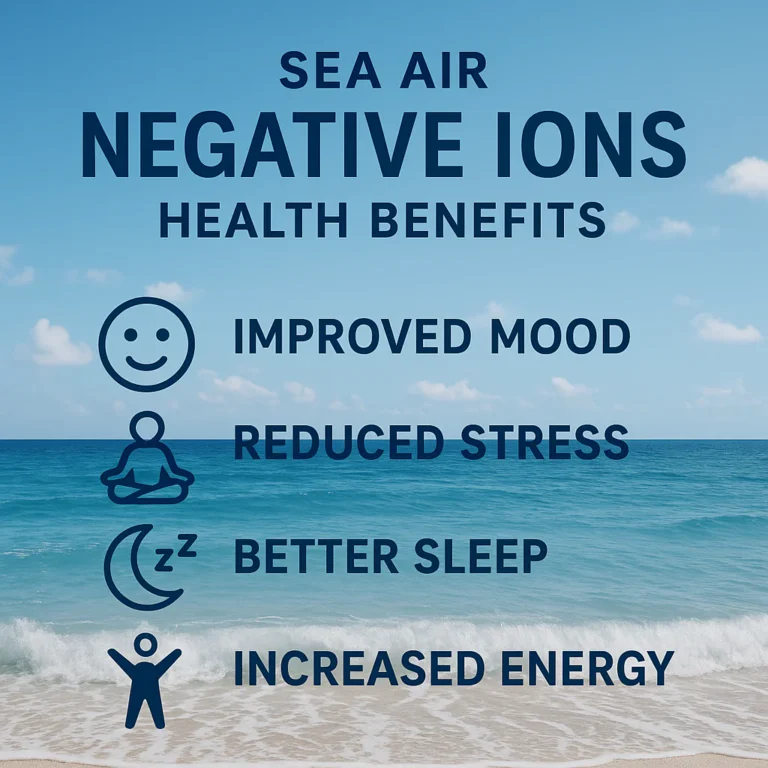
Claims about negative ions and deeper sleep are interesting but not strong enough to justify medical promises. Fresh air, daylight, reduced noise, and relaxation may explain much of the perceived benefit.
16. How to Maximize the Benefits Without Overdoing It
A Science-Informed Coastal Wellness Checklist
Before a beach visit, ask:
- Is the water quality acceptable?
- Is there a lifeguard?
- What is the tide doing?
- Is the water temperature appropriate?
- Do I have sun protection?
- Do I have drinking water?
- Does someone know where I am?
- What is my exit plan?
- Am I choosing enjoyment over proving something?
✅ Healthy Ocean Habits
- Walk, swim, or play at a sustainable intensity.
- Use the ocean to support—not replace—medical care.
- Rinse and moisturize after saltwater exposure.
- Eat seafood from safer, varied sources.
- Protect children with close supervision.
- Take mental-health benefits seriously without exaggerating them.
- Respect warnings and your own limits.
❌ Ocean Habits to Avoid
- Drinking seawater
- Swimming alone
- Entering during a closure
- Ignoring rip-current warnings
- Treating cold exposure as a competition
- Swimming under the influence
- Assuming clear water is safe water
- Using saltwater as wound treatment
- Sunbathing until burned
- Replacing prescribed medication with “natural healing”
When Beach Time Should Complement, Not Replace, Medical Care
Seek professional care for persistent depression, anxiety, skin inflammation, breathing difficulty, chest symptoms, serious pain, infection, or unexplained fatigue. The ocean can be a valuable part of a healthy routine, but it is not a doctor wearing board shorts.
Conclusion 🌊

The ocean can be good for your health because it encourages a powerful combination of movement, nature exposure, relaxation, daylight, social connection, and restorative attention. Sea swimming may improve fitness; shoreline walks may support mood; buoyancy can make exercise easier on joints; and wave sounds may help some people feel calmer.
The benefits are real enough to enjoy, but not dramatic enough to justify risky claims. Seawater does not detox the body, cure infections, guarantee vitamin D, or reliably boost immunity. Cold-water swimming carries genuine cardiovascular and hypothermia risks, polluted water can cause illness, and sun exposure requires protection.
Our confident recommendation: use the ocean as a safe wellness setting, not as a replacement for healthcare. Start with a supervised, lifeguarded walk or gentle swim; check conditions; protect your skin; bring fresh water; and leave before fatigue or cold takes over. The healthiest beach day is the one that leaves you refreshed, not featured in an emergency-services report.
The incomplete question from earlier—why do people often feel better by the sea?—now has a grounded answer: not because saltwater is magic, but because the coast can make healthy behaviors easier and stressful attention quieter. That is plenty of good news.
Recommended Links
For deeper reading and practical beach preparation:
- Health Facts™: Health Facts About Going to the Beach
- Health Facts™ Environmental Health
- Health Facts™ Chronic Diseases
- Health Facts™ Children’s Health
- Health Facts™ Allergies and Immunity
- CDC Healthy Swimming
- National Weather Service Rip Current Safety
- American Red Cross Water Safety
- American Academy of Dermatology Sun Protection
- CarePlus Pharmacy: 6 Benefits of Sea Swimming
Recommended Beach-Wellness Products
- Speedo Swim Gogles: Amazon | Speedo Official Website
- ZONE3 Swim Tow Float: Amazon | ZONE3 Official Website
- O’Neill Wetsuits: Amazon | O’Neill Official Website
- NRS Water Shoes: Amazon | NRS Official Website
- CeraVe Moisturizing Cream: Amazon | CeraVe Official Website
- La Roche-Posay Anthelios Sunscreen: Amazon | La Roche-Posay Official Website
Useful Books
- Why Zebras Don’t Get Ulcers by Robert M. Sapolsky
- The Nature Fix by Florence Williams
- Blue Mind by Wallace J. Nichols
- Breath by James Nestor
FAQ: Is the Ocean Good for Your Health?

Are there risks associated with ocean water exposure for health?
Yes. Risks include drowning, rip currents, cold-water shock, hypothermia, sunburn, dehydration, contaminated water, ear infections, skin irritation, jellyfish stings, sharp rocks, and marine wildlife injuries.
How can you reduce those risks?
Swim near lifeguards, check water-quality advisories, avoid alcohol, use sun protection, do not swim alone, and leave the water when conditions or symptoms change.
Read more about “🌊 7 Sea Air Secrets: Real Negative Ions Health Benefits (2026)”
How does being near the ocean reduce stress levels?
The coast may reduce stress through nature exposure, gentle movement, rhythmic wave sounds, daylight, social connection, and reduced mental stimulation. Evidence supports associations with improved well-being, but ocean exposure is not a standalone treatment for anxiety or depression.
Read more about “🌊 How Ocean Sounds Reduce Anxiety & Stress (2026)”
Does ocean water have antibacterial properties?
Seawater contains salt and microorganisms, but it is not sterile or reliably antibacterial. It should not be used to disinfect wounds or treat infection. Clean water, wound care, and medical advice are safer.
Read more about “🌊 Is the Beach Good for the Immune System? The Surprising Truth (2026)”
Is spending time by the ocean good for mental health?
For many people, yes. Beach visits may support mood, relaxation, awe, nature connectedness, and social bonding. Benefits are likely to be strongest when time by the water includes enjoyable movement and meaningful connection.
Read more about “🌊 What Affects Beach Health? 7 Hidden Threats Exposed (2026)”
Can saltwater help improve skin conditions?
It may temporarily soften scales or reduce surface oil, and some people with psoriasis report improvement. However, saltwater can sting, dry, or irritate eczema and broken skin. Rinse and moisturize afterward, and follow dermatology treatment plans.
Read more about “10 Shocking Disadvantages of Going to the Beach (2026) 🏖️🚫”
How does ocean air affect respiratory health?
Humid air may soothe dry nasal passages, and sea spray can create a temporary feeling of clearer breathing. Ocean air is not a substitute for saline therapy or asthma medication, and pollution, pollen, cold air, or mold may worsen symptoms.
Read more about “🌊 Does the Beach Lower Blood Pressure? The Surprising Truth (2026)”
How does spending time at the beach affect vitamin D levels in the body?
Sunlight can help the skin produce vitamin D, but production varies widely with season, skin tone, clothing, latitude, sunscreen, and age. Never seek sunburn for vitamin D. The safest way to address deficiency is testing and clinician-guided supplementation.
Read more about “🌊 15 Vital Health Facts About Going to the Beach (2026)”
Can listening to ocean sounds have a positive impact on stress levels?
Ocean sounds may encourage relaxation through rhythmic, predictable sensory input. Many people find them calming, but research on ocean waves specifically remains less definitive than popular wellness articles suggest.
Read more about “🌊 The Science of Beach Days: 7 Proven Health Facts (2026)”
What are the risks of ocean water pollution to human health?
Polluted seawater may contain pathogens, sewage, chemicals, or algal toxins. Possible effects include gastrointestinal illness, skin rashes, eye irritation, ear infections, and respiratory symptoms. Follow local closures and avoid swimming after heavy rain when authorities advise caution.
Read more about “🌊 Are There Health Benefits to Going to the Beach? (2026)”
Are ocean waters good for skin health and beauty treatments?
They can provide temporary cleansing and texture, but saltwater is not a complete beauty treatment. It may worsen dryness, irritation, hair brittleness, and sun damage. Rinse, moisturize, condition hair, and use broad-spectrum sunscreen.
How does ocean air affect people with respiratory issues?
It may feel comfortable for some people, but cold air, salt spray, pollen, pollution, and exertion can trigger symptoms. People with asthma or chronic lung disease should follow their treatment plan and seek medical guidance for new or worsening symptoms.
Read more about “🌊 10 Science-Backed Health Benefits of the Beach (2026)”
Can living near the ocean improve your mental health?
Coastal living is associated in some studies with better self-reported health and well-being, but this does not prove that the location caused the benefit. Income, healthcare access, housing, social networks, exercise, and self-selection can all influence the findings.
Read more about “🌊 7 Proven Benefits of Going to the Beach Essay (2026)”
What are the health benefits of swimming in the ocean?
Potential benefits include aerobic fitness, muscular endurance, low-impact movement, mood support, nature exposure, and social connection. Ocean swimming also carries risks that pool swimming does not, particularly currents, cold shock, changing weather, and variable water quality.
Read more about “🌊 Can You Absorb Magnesium from Sea Water? The Truth (2026)”
Are people healthier by the ocean?
Some coastal-population studies find better self-rated health, but the evidence is observational. People may be healthier because they are more active, have better access to outdoor space, or differ income and healthcare access. Living near the sea is not a guarantee of better health.
Read more about “🌊 Is the Beach Good for Your Immune System? (2026)”
How does the ocean help your body?
The ocean can help indirectly by making movement, relaxation, daylight exposure, and social activity more accessible. Buoyancy supports the body during exercise, while swimming challenges the cardiovascular system. Seawater itself does not supply meaningful nutrition through ordinary skin contact.
Read more about “7 Shocking Health Facts You Need to Know (2026) 🚨”
Does ocean water detox your body?
No. The liver, kidneys, lungs, and gastrointestinal system handle waste removal. Ocean swimming may help you feel refreshed, but drinking seawater, bathing in saltwater, or sitting near waves does not remove toxins from the body.
Read more about “35+ Interesting Facts About Health & Fitness (2026) 🧠”
Is cold-water swimming safe for everyone?
No. Cold water can cause gasping, rapid breathing, cardiovascular stress, impaired coordination, and hypothermia. People with heart conditions or other medical risks should consult a clinician first and should never swim alone.
What should I do after swimming in the ocean?
Rinse with fresh water, dry thoroughly, moisturize your skin, hydrate, change into warm clothing, and inspect cuts or irritated areas. Seek care for severe shivering, confusion, chest pain, breathing difficulty, infection signs, or persistent gastrointestinal symptoms.
Read more about “🌊 Saltwater Skin Secrets: The Real Effects on Your Health (2026)”
Reference Links
- Centers for Disease Control and Prevention: Healthy Swimming
- National Oceanic and Atmospheric Administration: Why You Shouldn’t Drink Seawater
- National Weather Service: Rip Current Safety
- American Red Cross: Water Safety
- World Health Organization: Ultraviolet Radiation)
- NIH Office of Dietary Supplements: Vitamin D
- NIH Office of Dietary Supplements: Iodine
- FDA: Advice About Eating Fish
- American Academy of Dermatology: Sun Protection
- American Academy of Pediatrics: Water Safety and Drowning Prevention
- Arthritis Foundation: Water Exercise
- American Heart Association: Swimming and Fitness
- National Center for Complementary and Integrative Health: Relaxation Techniques
- Environmental Research: Green and Blue Spaces and Health
- Environmental Research: Blue and Green Space Visits and Sleep
- Journal of Environmental Psychology: Water and Restorative Environments
- British Journal of Sports Medicine: Cold-Water Immersion Research
- Cochrane: Cold-Water Immersion for Muscle Soreness
- PADI: Health Benefits of Salt Water
- CarePlus Pharmacy: 6 Benefits of Sea Swimming
- Speedo Official Website
- ZONE3 Official Website
- O’Neill Official Website
- NRS Official Website
- CeraVe Official Website
- La Roche-Posay Official Website
- Neutrogena Official Website